
Eat Your Skincare
Whenever someone has a breakout, the advice is almost automatic: drink more water, eat healthier, and avoid sugar and fatty foods. There is a clear implication that good skin does not just come from what you put on your face, but also what you put in your body.
I never thought much of this until I noticed something small. The ingredients in my multivitamin were the same ones I was seeing on my skincare bottles.
I was taking what I applied at night in capsule form through the day. It made me wonder: if these ingredients are effective topically, do they actually work when you ingest them?
Although there are many more vitamins and herbal supplements offered on the market which may promote having some kind of skincare or beauty benefit, this article will look at five of the most commonly promoted nutrients. Before taking any supplement on this list or not, it is important to consult with a healthcare professional to understand the proper dosing, whether it is clinically proven to help, or if there may be any additional risks affiliated with taking them.
Vitamin A

Courtesy of Health
Vitamin A is found in many multivitamins and is commonly associated with eye health. It is also the foundation for retinoid ingredients found in both over-the-counter and prescription skincare. Common examples of prescription Vitamin A for skin health include the topical tretinoin, and the oral isotretinoin known under the brand name Accutane. Over the counter, examples of retinoids include retinol found in many anti-aging products, and adapalene which is the key ingredient of the cult-favorite Differin Gel.
Oral Efficacy: While there are oral prescriptions for isotretinoin, does Vitamin A in multivitamins help skin health? Studies show that adequate amounts of Vitamin A support skin and hair health, but outside of the optimal range it can have ill effects.
Topical Efficacy: Vitamin A has been shown to improve the appearance of wrinkles and aging, reduce hyperpigmentation, address acne, and treat psoriasis and other skin conditions.
Overall, Vitamin A may be more effective for skin health through topical formulations, so long as your Vitamin A levels are within clinically recommended ranges.
Elle has a list here of their eight favorite serums that contain Vitamin A.
Niacinamide
Courtesy of Herbal Dynamics Beauty
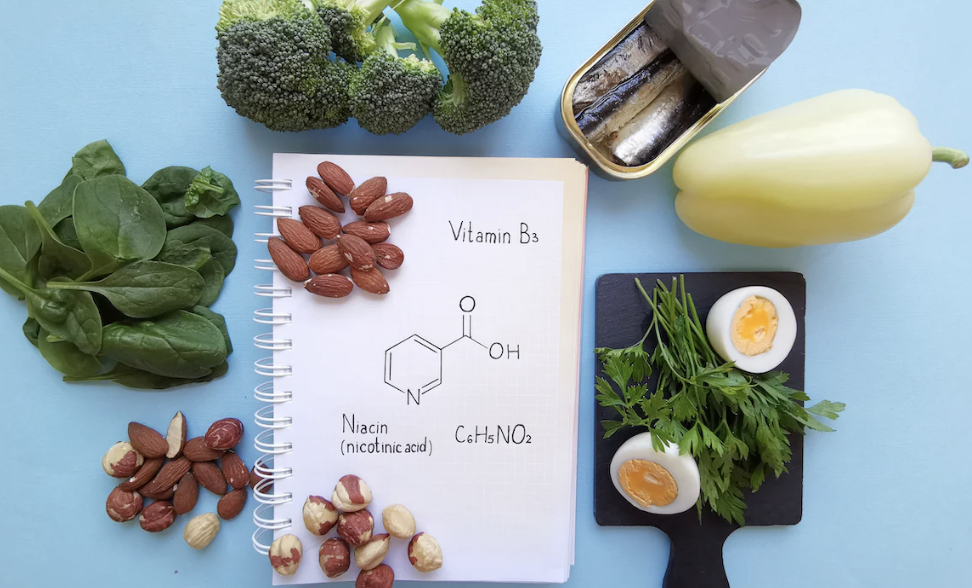
Niacinamide, also known as Vitamin B3, is another staple in multivitamins, but one that is less talked about. It is mainly publicized as an ingredient in serums.
Oral Efficacy:, There are some studies to show that, when taken orally, it can help reduce acne and have preventative properties against non-melanoma skin cancer. However, it has more health benefits as it reduces the risk for osteoarthritis, and may promote a reduced BMI.
Topical Efficacy: Niacinamide has been shown to improve fine lines and wrinkles, skin texture, firmness, and hyperpigmentation in various concentrations. It is often marketed as an anti-aging or brightening treatment, and studies clinically support these claims.
Overall, it seems like this is an ingredient which works best topically, but still retains some benefits orally and is something you may not try to supplement additionally, but is abundant in foods and present in most multivitamins.
Glamour put together a list here which contains their favorite 14 serums containing niacinamide.
Panthenol

Courtesy of Diabetes Self-Management
Panthenol is another member of the Vitamin B family, known as Vitamin B5. It is widely found in foods ranging from meat to vegetables to grains and dairy.
Oral Efficacy: Most people get enough Vitamin B5 in their diet naturally, but one study shows that supplementation can help with acne. Panthenol is also generally well-tolerated, but skin benefits are less clear with additional oral supplementation.
Topical Efficacy: When applied to the skin, panthenol acts as both a humectant and emollient, meaning it draws water up from lower levels of skin to hydrate the top layer, and can help fill in dry patches. It can help repair a damaged skin barrier, and is also used in hair products for smoothness, shine, and growth.
IPSY made a list of four products they like and contain panthenol.
Vitamin C
Courtesy of Kim Gallo Esthetics
This is a staple in any multivitamin, and is also often associated with immunity through products like Emergen-C and EZC-Pak which claim to help with colds. It is also increasingly common in serums and masks.
Oral Efficacy:Studies show that oral supplementation with Vitamin C can improve levels within plasma, meaning that your skin has a higher level of Vitamin C. This is particularly helpful if you are deficient in Vitamin C, but not as helpful for individuals who are not deficient.
Topical Efficacy: Topically, Vitamin C has been shown to improve wrinkles, protect from harmful UV rays, reduce the appearance of dark spots, and help with acne through an anti-inflammatory effect. However, many serums are ineffective as the compound can break down, and is naturally repelled by the skin barrier, so only certain forms can be adequately absorbed.
Overall, it seems like it is helpful both topically and orally for skin health, though benefits may be more limited orally, and one should choose their serum carefully since various formulations are less effective than others.
The New York Times created a list of what they think are the six best Vitamin C serums of 2026 here.
Collagen
:max_bytes(150000):strip_icc()/FoodsHighInVitaminA-86cc24d7e4fd4c05bbd7d6fa9c907635.jpg)


Courtesy of Anne Arundel ENT & Facial Plastic Surgery

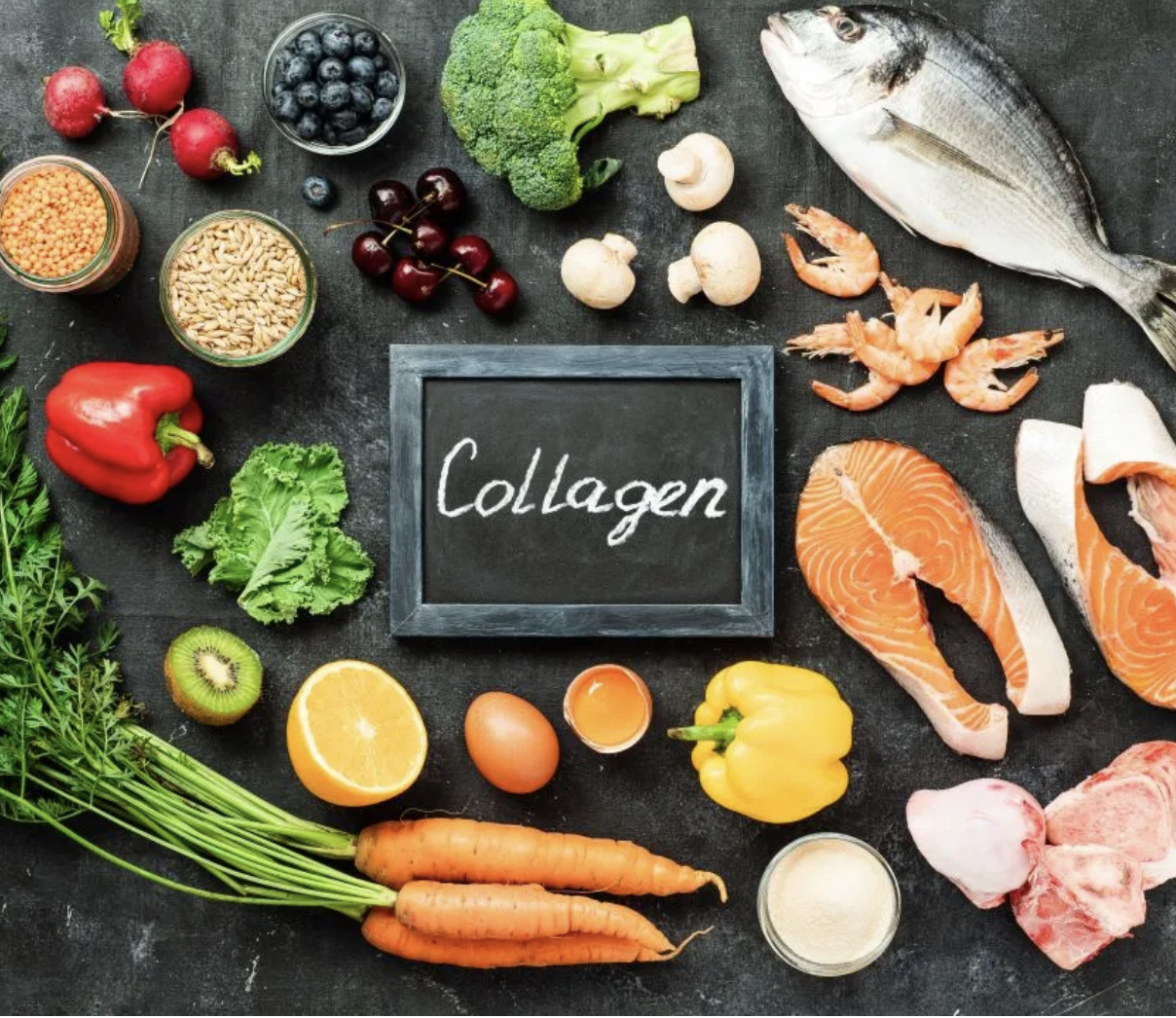
Collagen is a protein which is naturally produced in the body, and is also found as a supplement. It is the main building block of bones, skin, hair, muscles, and tendons, and is what keeps skin plump, but production often decreases with age.
Oral Efficacy: Studies are limited, but show some promise in increasing skin moisture and elasticity. However, there have been no large-scale studies, and since oral collagen is broken down in the stomach, it is unclear how much is actually absorbed and whether that leads to skin benefits.
Topical Efficacy:When applied topically, collagen does not absorb directly as well. Studies show that application of other skincare ingredients such as retinoids which stimulate the body’s own collagen production may be better than just applying collagen directly. However, it is a humectant, and can be good for moisturizing.
Overall, it seems like eating a diet rich in collagen or potentially adding a collagen supplement is shown to be safe and well-tolerated, but maybe skip the collagen cream in favor of a different ingredient.
Allure put together a list here of collagen creams to boost skin bounce and glow.
In conclusion, it seems that eating your skincare may have some benefits, but supplements are not a substitute for topical applications. Topical applications may be absorbed in different ways, and may serve more direct purposes, though for certain vitamins supplementation also had this effect.
However, the benefits of eating a balanced diet go beyond just having a glowy complexion. So, it is important to make sure you are receiving adequate amounts of these nutrients to promote overall health and wellness that is not just skin-deep.
Cover Image Courtesy of Heinens