
Debriefing Fashion’s Tariff Problem
There is a very specific dread that comes with opening your favorite brand’s website and noticing that the jacket you have been thinking about for three weeks has gone up $40 since the last time you checked. Welcome to fashion in 2026.
Tariffs are, in the least interesting definition possible, taxes on imported goods. When the U.S. government puts a tariff on products coming from another country, somebody has to pay for it. That somebody is, in a twist that will surprise no one, you. Brands absorb what they can and pass the rest down the line, and right now, the fashion industry is absorbing quite a lot. Tariffs on apparel currently sit about five times higher than those on most other industries. Your government is working hard.

Image courtesy of Brookings
If you take a look into your closet, and more particularly your clothes’ tags, you’ll quickly notice that almost nothing you own was made here. The supply chain for a single pair of jeans, for example, might touch Vietnam, Bangladesh, Cambodia, and China before it reaches the shelf at your local mall. This was, for a long time, a very efficient system. It is a less efficient system when trade policy changes every few months, and the countries your entire wardrobe comes from are at the center of it.
Fast fashion gets hit first and hardest, including any of your classic brands built on volume and the lowest prices, like Zara or Shein. These prices are made possible by thin margins and overseas manufacturing, but tariffs eat directly into that math. The response, historically, is to raise prices, quietly downgrade materials, or do both simultaneously while hoping consumers do not notice. In most of our experiences, though, the verdict is clear: you will notice.
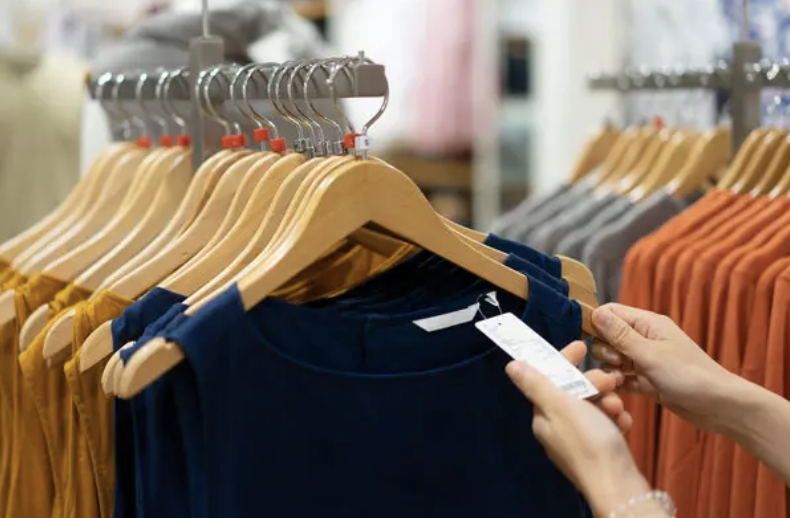
Image courtesy of The New York Times
Affordable luxury is not safe either, which is perhaps the more painful news. The brands that have successfully convinced us that $90 is a reasonable price for one makeup item, or $200 for a basic t-shirt, are running the same exposed supply chains as everyone else. The value proposition of affordable luxury has always been a little precarious, sure. You are paying for the feeling as much as the product. Yet, that feeling gets harder to justify when the product quietly gets $30 more expensive without justification. Rhode does not issue a press release when the Glazing Milk goes up in price. It just does.
So what does this actually look like in your closet? Probably, higher prices on things you already buy, a smaller selection as brands simplify their lines to manage costs, and a lot of labels quietly shifting countries as everyone scrambles to reroute production to somewhere less tariffed. Secondhand, notably, is immune to all of this, which may explain why resale is currently growing two to even three times faster than the primary market. If you have been sleeping on Depop, this is your sign. If you have been sleeping on The Real Real, this is also your sign, assuming you have slightly more disposable income. The Depop merchants were ahead of the curve, as usual.
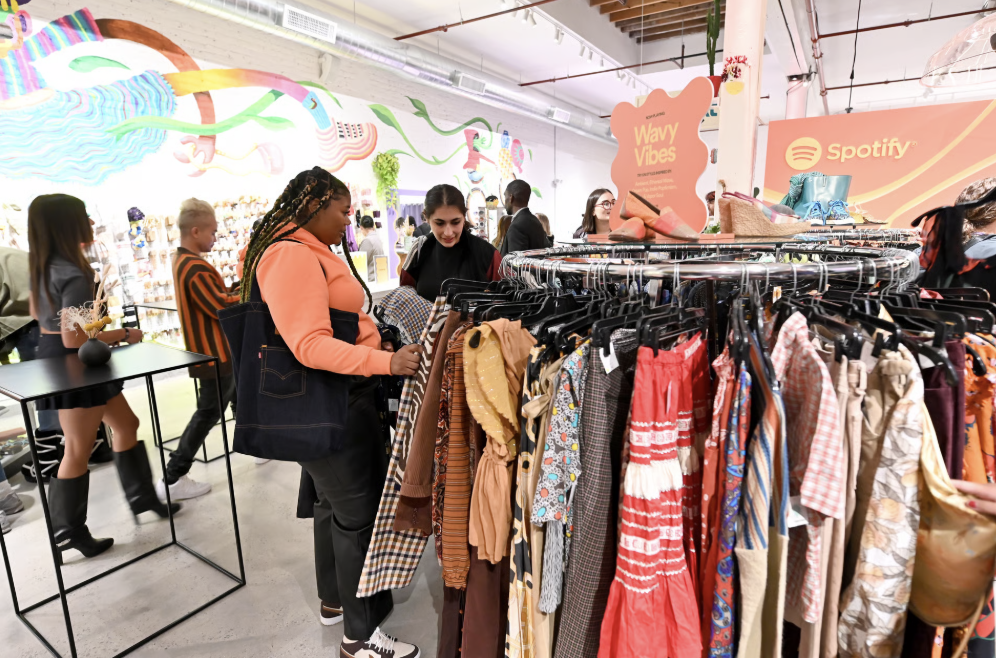
Image courtesy of Quartz
Price tags are the culmination of the supply chain, trade negotiations, and dozens of countries’ labor markets. None of this means you need to stop buying the things you love. It is just a reason to know why they cost what they cost, and to be a little less surprised when that changes.
Cover image courtesy of Northeastern Global News