
The Economics of the Limited Drop
The timer hits zero. The page refreshes. “Sold out.” For thousands of shoppers, this sequence has become a familiar gut-punch, and for the brands engineering it, a perfect outcome. The limited drop has quietly become one of fashion’s most sophisticated business strategies. What looks on the surface like a supply problem is actually a carefully constructed psychological and financial mechanism.
At the core of drop culture is a principle that psychologists and economists have understood for decades: scarcity feeds desire. When something is rare, we can’t help but want it more. Possessing it says something about who we are because a product available to anyone carries no social currency, but a product that only 200 people own? Now we’re talking.
For brands, the drop model solves a problem that has plagued traditional retail forever: how does one maintain desirability at scale? The conventional model is a slow erosion of brand equity. Produce broadly, distribute widely, and discount when inventory stalls. Every markdown is a quiet admission that the market decided your product wasn’t worth what you tried to sell it at. Thus, lowering the brand value in the mind of the consumer.
The drop model inverts this entirely. By releasing limited quantities at full price, brands control both the narrative and the customer. Those who “get it” become unofficial ambassadors in on the joke, while those who missed out are forced to sit and wait, wistfully, for the next drop. Notice: the brand never has to chase the consumer. They simply open a brief window and watch the chaos ensue.
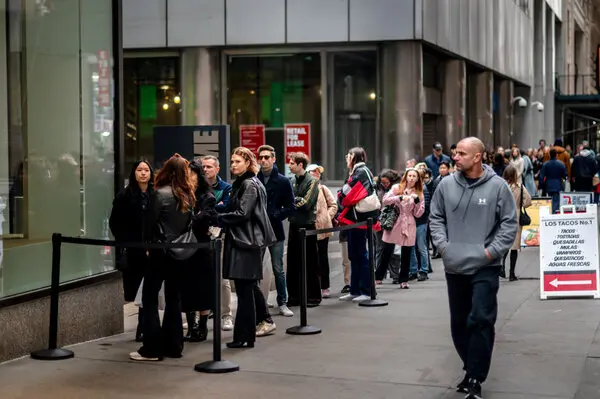
Courtesy of The New York Times
The economics of the limited drop are fascinating and very clean. Producing less means less capital tied up in inventory, low overstock risk, and no need for end-of-season markdowns that cannibalize margin and brand image. When an item sells out in minutes at full price, the brand captures maximum value on every unit. This is a feat that traditional retail business models rarely achieve.
No recent example illustrates this playbook more cleanly than the influencer-founded brand Parke. Its mock-neck top, a minimalist, fitted and trendy layering piece, has become the unlikely star of the funhouse image of a well-executed drop model.
To be honest, the mock-neck is not on its face a revolutionary garment. Yet, each drop sells out within minutes. TikToks documenting the restock process and the frantic checkout experience have become a massive cultural event. Parke’s approach reveals something important about the new independent brand playbook— you don’t necessarily need the infrastructure of an incumbent legacy house to manufacture desire. Rather, all you need (beyond a modest preexisting platform) is a consistently strong aesthetic and the discipline to never oversupply.
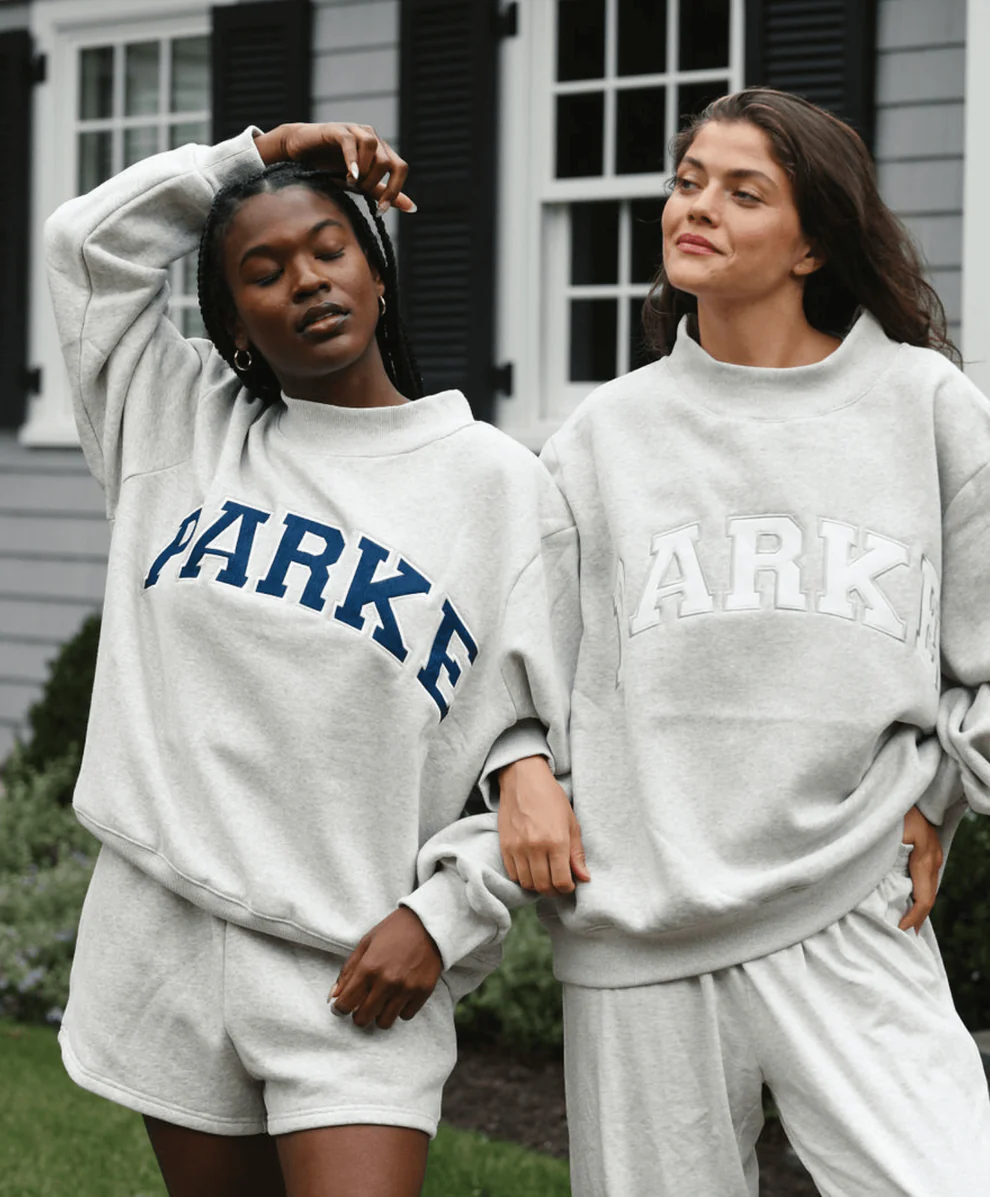
Courtesy of Parke Fashion
In the end, it’s worth asking as drop culture matures whether the scarcity is ever really real, and to examine its implications on consumers. While some brands are more transparent about the strategy than others, what’s clear is that in this business model, the end consumer is both the target and the willing participant. Consumers, however savvy you might see them, are still the ones setting the phone alarms, refreshing web pages, and paying premiums. And this is exactly why it works. At the end of the day, whether the scarcity is genuine or engineered, the desire it produces is completely real. In a saturated fashion market where infinite options are available at the scroll of a thumb, the limited drop offers the feeling of satisfaction, and snagging something valuable. Whether you love it or hate it, that feeling is powerful, and brands know it. And judging by the sold-out pages, we’re buying it.
…or at least, we’re trying to.
Featured Image: Courtesy of The New York Times