
For decades, the standard routine for men’s personal care was remarkably simple: a bar of multi use soap, a splash of water, and perhaps a quick pass with a razor if the occasion demanded it. Today, that landscape looks entirely unrecognizable. Walk down any drugstore aisle or scroll through social media, and you will find an expansive universe dedicated entirely to male grooming, ranging from Korean skincare regimens and anti-aging serums to hair loss prevention treatments [Gómez de Tejada 2025].
This cultural shift begs a complex question: Are we witnessing a liberating liberation from rigid stereotypes that finally allows men to embrace self care, or is it simply an expansion of consumer capitalism that doubles down on aesthetic pressures?
The Growth of Modern Grooming
The numbers tell a compelling story of a multi billion dollar transformation. Market insights indicate that the global men’s grooming and skincare sector continues to expand rapidly, with younger generations leading the charge. According to recent trend reports, Gen Z men account for a massive share of search and spending volume in personal care, treating maintenance as an everyday wellness habit rather than an afterthought.
The viral skin care trends have normalized habits that were once heavily stigmatized. Sunscreens formulated specifically for men, signature fragrances, precision beard oils, and concealers designed to blur blemishes are no longer niche products; they are mainstream consumer staples.
Destigmatizing Self Care
From one perspective, this evolution is undeniably a victory for progressive self expression. Traditional masculinity enforced a narrow definition of presentation: caring too much about one's skin, hair, or appearance was often mocked as "unmasculine" or overly vain [Cosmetic News 2026].
By dismantling these boundaries, the modern grooming boom opens up vital space for emotional and physical wellness. Self care should never have a gender. When men invest in skincare or grooming rituals, they are prioritizing hygiene, skin health, and mental relaxation. For many, trying a new hairstyle, experimenting with a skincare routine, or managing hair loss is an act of agency and taking control of how they present themselves to the world.
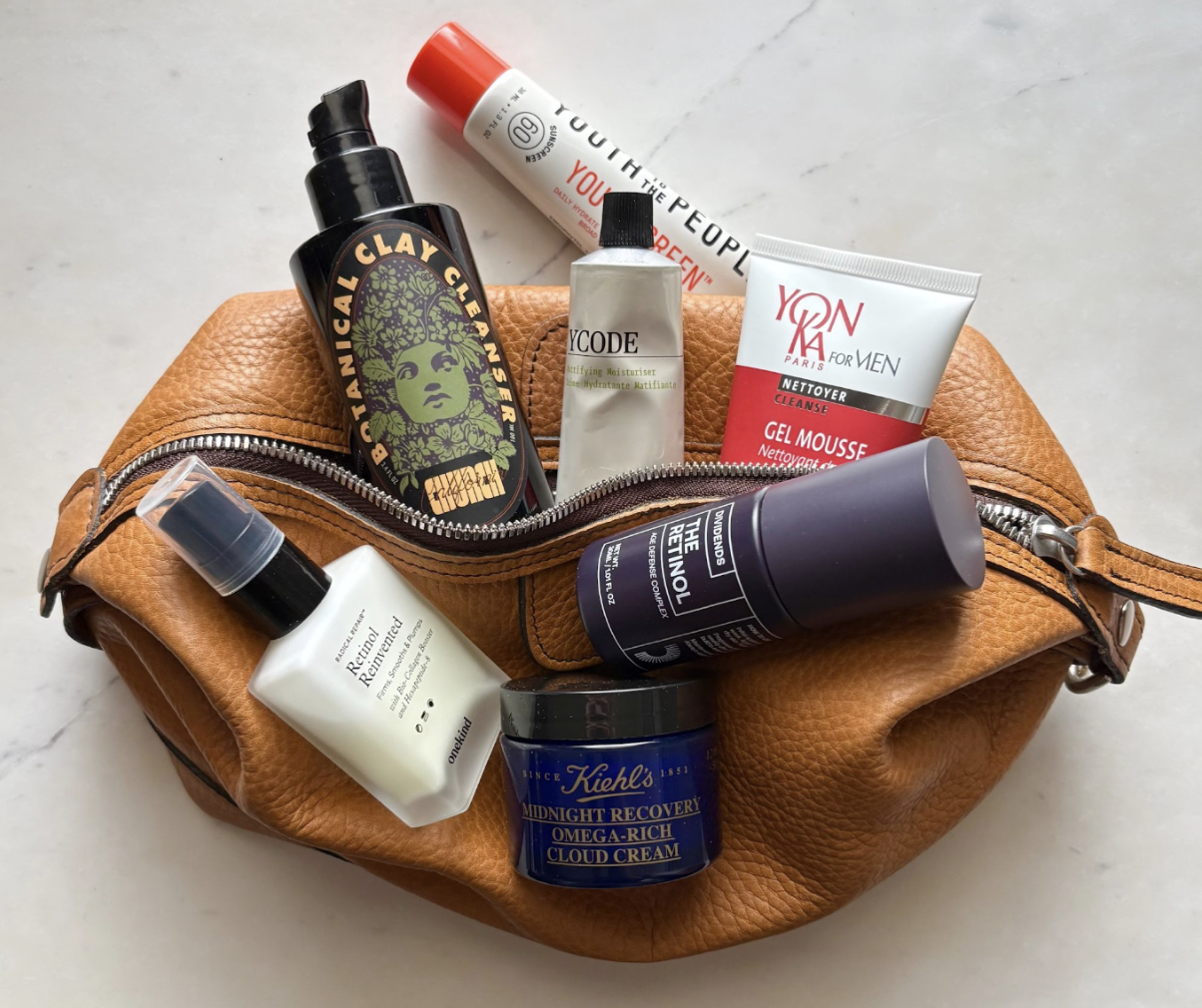
Image courtesy of Michael Stefanov
The Perfection Trap
However, liberation can quickly become an obligation. As grooming expectations rise, the pressure begins to take shape. When clear skin, thick hair, symmetrical jawlines, and curated aesthetics become baseline expectations in professional and dating environments, the freedom to groom transforms into an obligation to optimize.
Social media algorithms, targeted advertisements, and influencer culture constantly feed anxieties around aging, thinning hair, and perceived physical flaws. Instead of feeling liberated, men can easily find themselves trapped in a new cycle of consumerism, buying expensive treatments out of fear rather than liberation [Coherent Market Insights 2025].
The video below walks through contemporary skincare and grooming routines, illustrating how daily maintenance is approached in practice.
Finding the Balance
Ultimately, the expansion of male grooming is a double edged sword. It offers powerful tools for wellness and individuality, but it also risks insecurity if driven purely by market exploitation.
The distinction lies entirely in intent. Grooming becomes a liberating form of self-care when it is driven by personal comfort, health, and joy. It becomes a trap when it is fueled by anxiety and the pursuit of an impossible corporate standard. As the grooming landscape continues to mature, the real challenge for modern men is learning to enjoy the benefits of the skincare aisle without letting it dictate their self-worth.
Featured image courtesy Justine Ross, Michigan Medicine