
The Death of Cool: Can an Aesthetic Remain Subversive on a Zara Rack?
Kurt Cobain famously wore thrifted, unraveling flannel shorts to his 1991 Seattle performance not as a fashion statement, but as a rejection of 1980s structured fashion culture. By 1992, Marc Jacobs brought grunge to the world of high-fashion in the Perry Ellis runway show Spring/Summer 1993 "Grunge" collection. Today, a distressed “grunge” flannel can be produced in a Guangzhou factory, shipped to a Zara store in Manhattan, and hung on a rack within fifteen days all for $49.99.
The same consumerist cycle has swallowed every major subcultural look of the past two decades. Cyber Y2K, a genre born from the turn of the millennium, digital anxiety, metallic cybernetics, and thrifting was rapidly commodified into polyester crop tops. Gorpcore, a utility driven movement that prioritized technical hiking gear as a protest against conventional menswear, was swiftly packaged into mass market synthetic cargo pants. This pattern raises a fundamental cultural question: Can an aesthetic retain any degree of subversion once it hits the rack at a fast fashion giant?
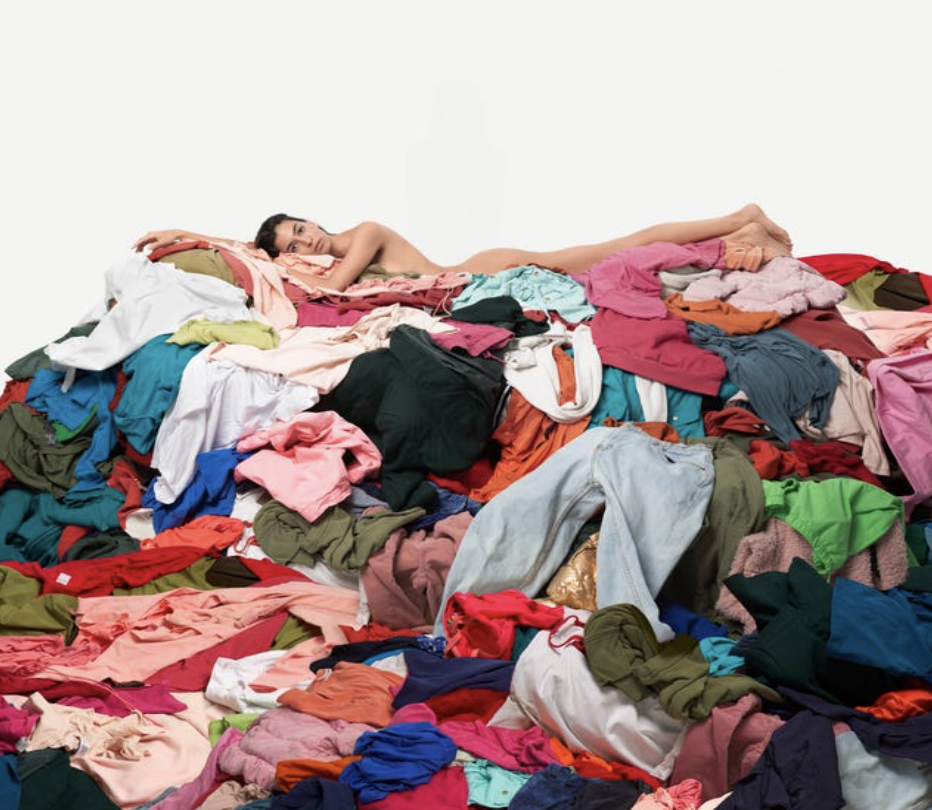
Image Courtesy of Enrique Badulescu
To understand why mass production kills subversion, we have to look at how subcultures generate meaning. In his foundational 1979 text Subculture: The Meaning of Style, sociologist Dick Hebdige argued that youth subcultures communicate resistance through bricolage, which is the act of taking everyday objects out of their intended contexts and repurposing them as a medium for social critique.
Safety pins became punk jewelry; work boots became grunge armor; technical climbing gear became streetwear. The subversion lived in the friction between what the item was designed for and how it was deployed. When fast fashion retailers like Zara, H&M, or Shein start to mass produce these small acts of expression looks, they perform a process called incorporation. Subculture’s visual signifiers of rebellion – rips, metallic chrome, utilitarian buckles – are stripped of their original social context, economic necessity, and political commentary. The aesthetic is reduced purely to a visual surface.
Subversive style historically derived its value from friction. Finding a specific vintage jacket or obscure band tee required physical effort, represented belonging to a community, and time; the shared experience of searching at the thrift store to find the perfect ripped jeans is what made it subversive or alternate. In fact, wearing thrifted, altered, or handmade garments was a direct critique of mass consumerism that pushes fast fashion on the general population. The clothes acted as a uniform for shared political, musical, or social values; fast fashion eliminates friction entirely.
Once an aesthetic reaches mass retail, its original anti-establishment purpose is dead, but subcultures can adapt to their environment. As broad aesthetics like Y2K or Grunge become ubiquitous, insiders move toward hyper niche, difficult to replicate practices such as garment modification, custom reconstruction, or sourcing obscure archive pieces that fast fashion algorithms cannot easily index through algorithms. Buying a Zara garment isn't subversive, but defacing it, heavily altering it, or pairing it with oppositional art reintroduces the friction that mass retail tried to smooth over. The subculture moves on to invent a new visual language through alteration before the supply chain can catch up.
An aesthetic cannot remain subversive on a Zara rack because the rack itself represents the very system the subculture sought to critique. The clothes may look identical, but without the friction, labor, and intent that created them, they are just fabric on a hanger.
Featured image Courtesy of Enrique Badulescu