
The Evolution of the Victoria Secret Fashion Show
For more than two decades, the Victoria’s Secret Fashion Show has defined a kind of glossy, hyper-feminine fantasy. It’s more than just a runway, in its prime it was a pop-culture ritual, a televised spectacle where beauty, confidence and performance came together to create one divine moment. But as the feathers settled and the glitter faded, something deeper began to shift. The show, once celebrated for its dreamlike perfection, became a mirror, reflecting back not just the brand’s image of womanhood, but the audience’s changing relationship with it.
When it first appeared in 1995, the Victoria’s Secret Fashion Show embodied the peak of aspirational glamour. It promised pure escapism through the signature, unmistakable look: voluminous hair with effortless bounce, sunkissed skin and a runway glow, that defiantly came together on each Angel adorning it. The accompanying wings were not to be outdone either, majestic and dazzling, crafted less as garments and more as extensions of the Angels’ perfection. Audiences adored this extravagant display because it embodied everything pop culture told them to want: confidence, beauty, power, all wrapped up in glamour. This world radiated something ethereal, even if it may have seemed impossible.
In its golden years, the mid-2010s, the production felt untouchable. The hair became as famous as the walk. The wings became more elaborate, constructed from glass, flowers and even paper art. Growing into a global event, the show featured exclusive performances and even more ‘exclusive’ models. Popstars like Rihanna and The Weeknd shared the stage with supermodels who were household names successfully evoking a mix of awe and envy in its audience.
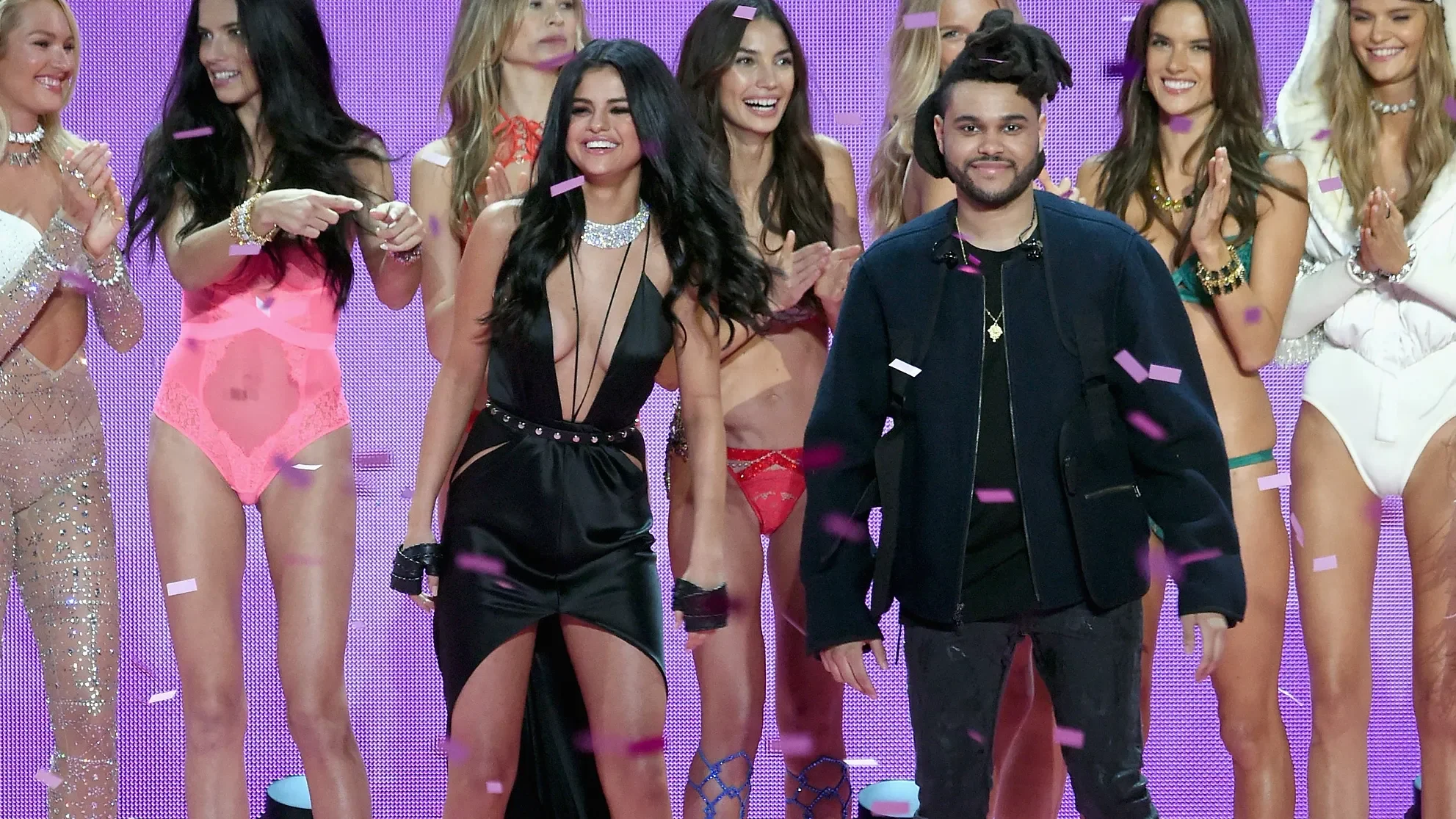
Courtesy of Teen Vogue
But as the spectacle swelled, something shifted. The same gloss that once enchanted now began to alienate. Audiences were no longer content to watch perfection glide by. The beauty ideal that had seemed aspirational a decade earlier now felt restrictive, out of step with a more self-aware, inclusive generation. The cultural turning point came quickly and loudly. By the late 2010s, the world around the show had changed, but the show itself hadn’t.
Social media had started to dismantle the idea of a single beauty narrative. Platforms like Instagram and TikTok gave voice to new faces, new bodies and new styles that had long existed outside the VS frame. Conversations about diversity, inclusivity, and authenticity continued to transform every corner of fashion, and the once-revered Angel look now carried the weight of cultural disconnect. The tousled waves, the gleaming tan, the hourglass silhouette, were all suddenly the subject of critique. Audiences didn’t just want to see beauty anymore, they wanted to see themselves.
The decline was swift and public. Ratings plummeted. The brand’s image, polished to a near-blinding shine, was questioned and critiqued. The show’s hypnotic glamour was suddenly read as a symptom of an outdated ideal, an illusion no longer resonating with a generation increasingly defined by transparency and individuality. The fall from grace was dramatic, but necessary. In 2019, the show was cancelled, marking the end of an era but also the beginning of a reckoning. What did fantasy look like now? For the first time, Victoria’s Secret wasn’t dictating it, they were the ones watching and learning. The audience had now become the most powerful creative director.
So when the brand returned in 2023 with The Victoria’s Secret World Tour, the shift was palpable. The Angels were very much still present, but representative of a different fantasy. The focus had shifted from spectacle to story. Models were cast for their individuality and the production leaned toward film, narrative and emotion. Women and creators from around the world stood before the audience, diverse, grounded and each telling their own story.
The styling followed suit. Gone were the identical blowouts and sunlit tans. In their place, natural curls, textured hair, and makeup that enhanced rather than transformed. The wings, too, were reimagined, sculpted not for symmetry but for expression.
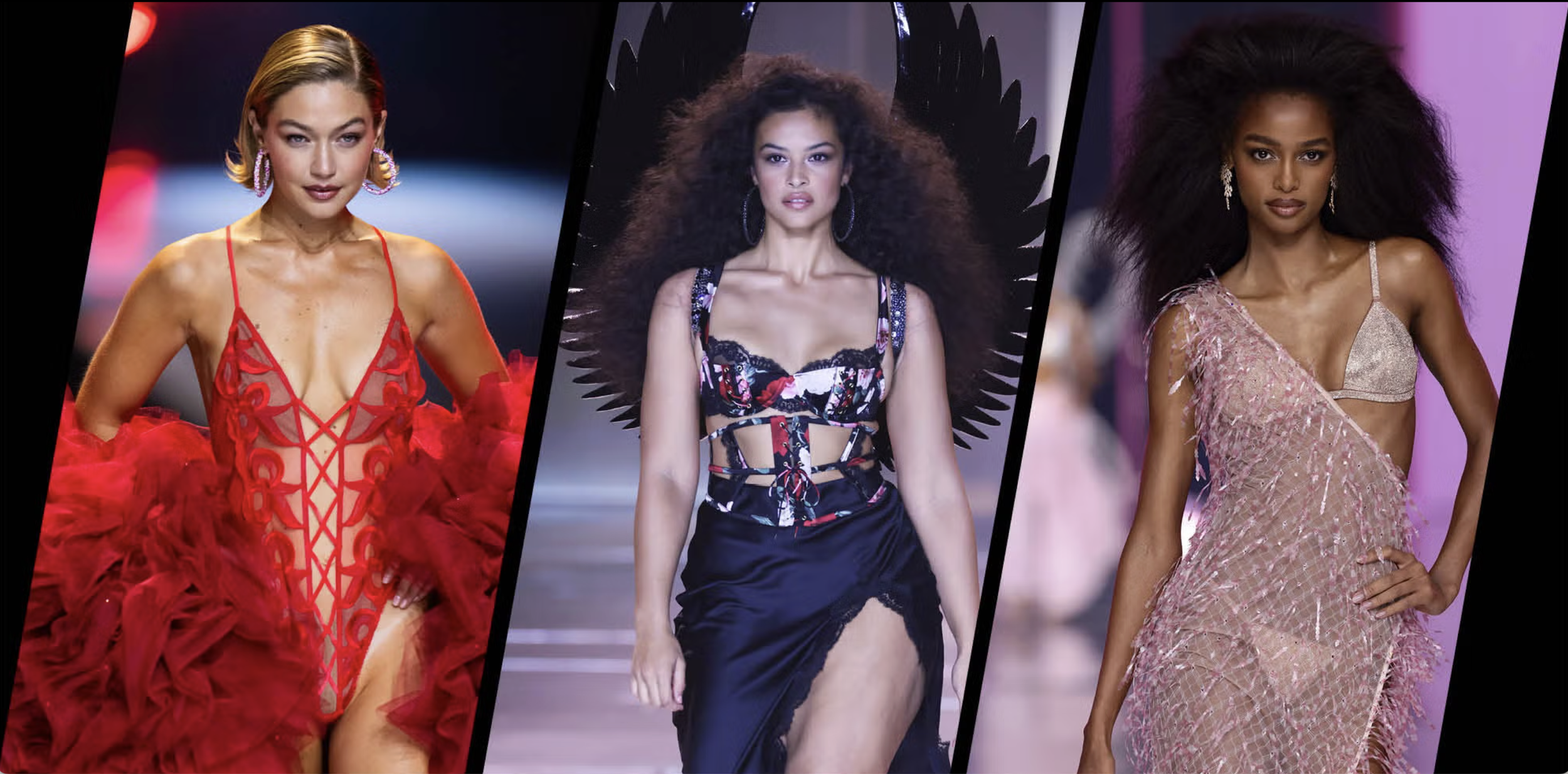
Courtesy of Harpers Bazaar
This reimagining reflects a fundamental shift in how beauty is both performed and perceived. Where the early 2000s show sought to inspire desire, today’s iteration seeks to invite connection. Audience perception, once the show’s greatest challenge, is now its compass. Modern viewers no longer crave to be told what’s beautiful, they crave to be seen in it. In turn, the show’s production has become more introspective, almost self-aware, acknowledging that fantasy is only sustained when it evolves with the people who believe in it.
This evolution is underscored by these quiet triumphs. Although the wings may have gotten smaller, the hair more natural, the tone more introspective, the fantasy still exists. Instead, it takes on a new meaning. No longer a dream to chase, but a feeling to inhabit. Today, the Victoria’s Secret Fashion Show truly embodies a mirror, reflecting not just what beauty looks like, but who gets to define it.
Featured Image Courtesy of Allure